Fleet maintenance software: why it only works if the driver's numbers are right
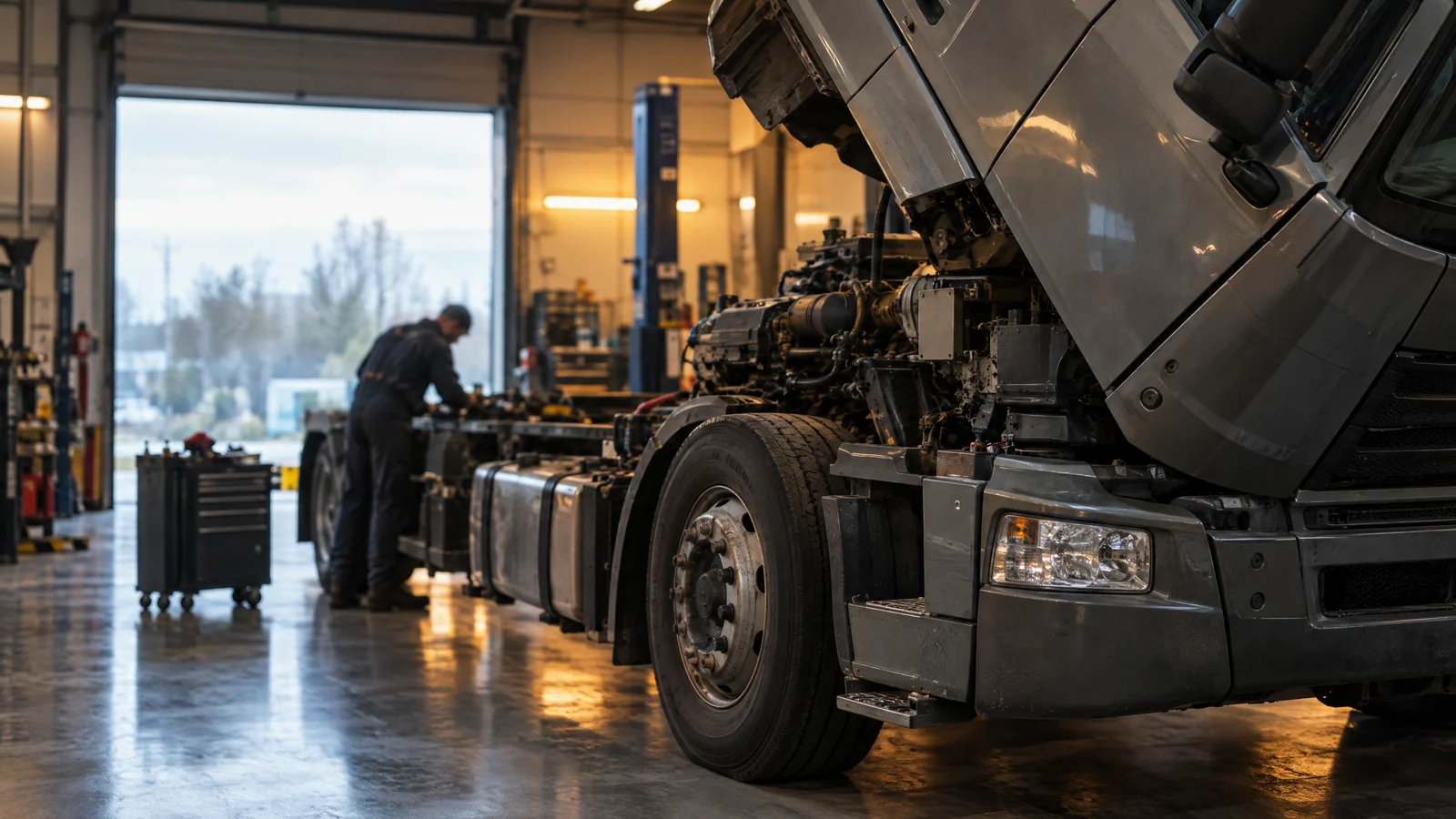
Fleet maintenance software promises something every haulier wants: no more surprises. Services planned before they're overdue, tyres changed before they're bald, inspections booked before the deadline. The truck goes into the workshop on a Tuesday afternoon at the depot, not on a Thursday night on the hard shoulder abroad.
It's a good promise. But almost every maintenance plan in that software is calculated from one number — the odometer. And the person who delivers that number, day after day, is the driver.
What fleet maintenance software actually does
Different products, same core:
- Service intervals — oil, filters, brakes, based on kilometres, engine hours or dates.
- Inspections and deadlines — roadworthiness tests, tachograph calibration, fire extinguishers, whatever the law and the manufacturer require.
- Defects — something is wrong, somebody reports it, the workshop fixes it, the case is closed.
- Costs and history — what was done to which vehicle, when, and for how much.
Everything on that list is either triggered by kilometres or recorded against kilometres. If the kilometres are wrong, the plan is wrong.
Where maintenance plans really fail
Not in the software. In the numbers that go into it.
Odometer readings entered late. A reading typed in at the end of the week, from memory, is a guess. Guesses shift service dates — sometimes early, which wastes money, sometimes late, which costs a lot more.
Readings entered wrong. A missing digit turns 412,360 into 41,236. The software either ignores it or, worse, recalculates the whole plan around it.
Workshop visits nobody recorded. The truck had a quick stop at a roadside service in another country. It never made it into the system, so the next service is planned as if it never happened.
Defects reported by phone. "Something's knocking in the front left" said to the dispatcher on a Friday afternoon is gone by Monday.
What the driver can do — and it's less than you'd think
The good news: none of this needs extra work. It needs the same work done at a different moment.
- Enter the odometer when you see it. At the start of the trip, at each stop, at the end. Not later.
- Record every workshop stop. Even the short ones. Where, when, and at what reading.
- Report defects in writing, right away. A line in the log beats a phone call nobody wrote down.
- Check that your numbers make sense. A reading lower than the last one is always a mistake — catch it now, not after the service plan has been rebuilt around it.
What a good driver app contributes
A maintenance system in the office and a logbook in the cab are two ends of the same chain. The logbook app doesn't need to plan services. It needs to deliver clean data to whoever does.
That means: odometer readings with the time they were taken, a warning if a reading is lower than the previous one, a separate entry type for service stops, and a way to write a short note. And it has to work without signal, because workshops and underground yards are exactly where the signal disappears.
Why drivers should care
It's tempting to see fleet maintenance as the office's problem. But when a service is missed, it's the driver who ends up waiting for a tow truck, sleeping in a lay-by or explaining to a customer why the load is a day late. Accurate readings aren't paperwork for the boss — they're what keeps your own week predictable.
And there's a second benefit. When the history is written down, nobody can say "you never reported that". The note with the date and the odometer reading is there.
Get RUNAGA Lite
RUNAGA Lite is not maintenance planning software — it doesn't schedule services or send reminders. It's the driver's side of the chain: odometer readings saved with the time at every stop, a warning when a reading is lower than the last one, a dedicated service entry, free-text notes for defects, and it all works without signal. When you finish the trip, the completed report goes to your boss by email as a PDF, ready for whoever keeps the maintenance plan. RUNAGA does not track your location.
Please note: RUNAGA Lite subscriptions are currently available in the USA and most of Europe, but not in the United Kingdom.
- iPhone: App Store
- Android: Google Play